
Personalized product recommendations are transforming the e-commerce landscape. They enhance user experience, drive conversions, and foster customer loyalty. However, creating effective recommendations without AI can be challenging, especially as user preferences grow ever more complex. This is where artificial intelligence enters the picture, offering a data-driven approach to tailor product suggestions to individual shoppers.
In this article, we'll explore how AI, integrated into your product page optimization tips, can be a major improvement. We'll examine specific strategies, from leveraging buyer personas and A/B testing to implementing voice search and video content, all geared towards maximizing the impact of AI personalization.
- Understanding AI for Personalized Recommendations
- Data Collection: Building Customer Profiles
- Algorithm Selection: Choosing the Right Fit
- Training AI: Educating the Recommendation Engine
- Implementing Personalized Product Displays
- A/B Testing: Optimizing Conversion Rates
- User Feedback Loop: Refining Recommendation Accuracy
- Ethical Considerations: Respecting Customer Privacy
- Continuous Improvement: Evolving Recommendation Strategies
Understanding AI for Personalized Recommendations

Understanding AI for Personalized Recommendations
Artificial Intelligence (AI) has revolutionized product recommendations, allowing businesses to deliver hyper-personalized experiences to their customers. The key to successful AI-driven personalization lies in leveraging data-driven insights to create tailored product pages that resonate with individual users.
To start, businesses should focus on gathering and analyzing customer data, including browsing history, purchase patterns, and preferences. This data forms the foundation for building buyer personas, which help in segmenting customers into distinct groups with shared characteristics. A clothing e-commerce site might identify a "casual explorer" persona, characterized by an interest in outdoor apparel and a preference for sustainable brands. By understanding these personas, the site can personalize product pages with relevant recommendations, such as showcasing eco-friendly clothing options specifically to this segment.
Integrating user-generated content, such as product reviews, can significantly enhance AI personalization. "Product page reviews near me" queries are becoming increasingly common, and incorporating local social proof can be a powerful tool for conversion rate optimization (CRO). A local bakery's website could display customer reviews and ratings for specific products, like artisanal breads, to influence new visitors' purchasing decisions. This strategy not only boosts conversions but also fosters customer trust, reducing skepticism at the product page level.
Incorporating AI personalization into product page optimization tips requires a strategic approach. A/B testing should be employed to validate personalized recommendations, ensuring they align with user preferences and behavior. The goal is to create a seamless, intuitive shopping experience that leverages the power of AI while maintaining a user-centric design. By combining data-driven personalization with a focus on mobile optimization and clear call-to-actions (CTAs), businesses can effectively boost their product page conversions and drive better overall performance.
Data Collection: Building Customer Profiles

Data Collection: Crafting Customer Profiles for Personalized Recommendations
In the realm of e-commerce, understanding your customers is paramount. Building detailed yet nuanced customer profiles allows for targeted product recommendations, enhancing the user experience and boosting conversions. This process begins with data collection-a strategic and thoughtful approach to gather, organize, and interpret customer data. A key strategy here is leveraging licensed product photography services to create visually compelling content that not only captures customer attention but also provides valuable insights.
Consider a small business selling unique home decor items. By integrating licensed photography into their product pages, they can gather data on customer interactions-like image views, time spent per product, and click-through rates. This visual data can then be combined with textual information, such as product reviews and purchase history, to create comprehensive customer profiles. These profiles go beyond basic demographics, examining preferences, styles, and even life stages, which can significantly refine product recommendations.
The process of data collection can be optimized through same-day product page improvement, a strategy that leverages A/B testing and real-time analytics. For small businesses, this might involve quickly adapting product page design to reflect the latest trends or customer preferences. A simple change in color schemes or product arrangement can be tested to gauge customer response, all while collecting valuable data to refine future recommendations. This dynamic approach ensures that product pages remain relevant and engaging, aligning with the latest market shifts and customer behaviors.
By focusing on data-driven insights, businesses can personalize product recommendations with a high degree of accuracy. This not only improves customer satisfaction but also fosters a deeper sense of community and engagement. A lifestyle brand targeting young professionals might use customer data to curate collections that cater to their urban, fast-paced lifestyle. The result? A seamless shopping experience that feels uniquely tailored to each customer's needs and preferences.
Algorithm Selection: Choosing the Right Fit

Choosing the right algorithm for AI-driven product recommendations is a critical step in optimizing your product pages for small businesses. The selection process involves understanding your target audience, product categories, and business goals. A small fashion boutique will require a different algorithm than an online electronics retailer. A key consideration is the type of data available and how well the algorithm can learn from and predict customer behavior based on that data.
Professional product video creation and licensed product photography services can significantly enhance the visual appeal of your product pages, but the core recommendation engine should be carefully designed. Consider algorithms that can adapt to new data and trends, especially in dynamic markets. Machine learning models, such as collaborative filtering or deep learning, excel at this by analyzing patterns in customer interactions and product features. A small business selling handmade crafts might use a hybrid approach, combining collaborative filtering for similar purchases with content-based filtering based on product descriptions and images.
Once selected, the algorithm should be integrated seamlessly into your product page design for small businesses. A clean and intuitive layout, optimized for mobile devices, ensures a positive user experience. Displaying personalized recommendations front and center, perhaps with a call-to-action (CTA) like "Shop Similar Items," encourages user engagement. Leveraging social proof, like customer reviews, can further enhance trust and conversion rates. By balancing AI-driven personalization with user-friendly design, small businesses can elevate their product page optimization tips to new heights.
Training AI: Educating the Recommendation Engine

Training AI to provide personalized product recommendations is a powerful strategy that can significantly enhance e-commerce success. It involves educating the recommendation engine to understand user behavior, preferences, and purchase patterns, allowing it to offer tailored suggestions that increase engagement and conversions. A well-trained AI model can transform a generic product page into a dynamic, personalized experience, leveraging the latest in machine learning to deliver relevant results.
The process begins with data collection and preparation. Gathering comprehensive customer data, including purchase history, browsing behavior, and demographic information, provides the raw material for training. This data is then meticulously cleaned, structured, and labeled to ensure accuracy and consistency. For small businesses, focusing on local product page SEO tips can be particularly effective. By optimizing product pages for relevant local keywords, AI algorithms can learn to associate specific products with geographic areas, enabling targeted recommendations for local customers.
Creating effective training datasets requires a thoughtful approach. Techniques such as data augmentation, where synthetic data is generated based on existing patterns, can expand the dataset while maintaining quality. Employing diverse representation ensures the AI model generalizes well across different user segments. Including a variety of customer profiles, purchase scenarios, and product interactions can help the engine make accurate predictions for a broader audience. Once trained, the AI recommendation engine can adapt to individual users, offering them a unique and compelling product page experience.
Affordable product page optimization is achievable through AI integration. Using open-source tools and cloud-based platforms can significantly reduce costs while still providing advanced functionality. By continuously refining the training data and updating the model, businesses can ensure their recommendation engine stays current and accurate, contributing to sustainable growth and improved customer satisfaction. This data-driven approach to product page optimization tips keeps the e-commerce platform dynamic and responsive to the evolving needs of its users.
Implementing Personalized Product Displays

Implementing personalized product displays is a powerful strategy to enhance user experience and drive conversions. In today's competitive e-commerce landscape, where customers are bombarded with countless choices, showcasing products in a tailored, engaging manner can set your site apart. By leveraging AI, you can create dynamic and relevant product presentations that cater to individual shoppers' preferences, ultimately increasing sales and customer satisfaction.
One effective approach is to utilize licensed product photography services that offer customizable, high-quality visuals. These services allow you to showcase products from multiple angles, in different settings, or even in action, providing a richer shopping experience. A clothing retailer could use licensed photography to display a dress in various styles, colors, and fits, helping customers visualize the product's versatility. This strategy not only saves time but also ensures a consistent visual aesthetic across product pages, enhancing your brand's identity.
When optimizing for mobile-first product page strategies, personalization becomes even more critical. With a majority of users accessing websites through their smartphones, it's essential to ensure that product displays are optimized for smaller screens while still providing a rich, interactive experience. This might involve condensing product descriptions, utilizing responsive design, and employing carousels or sliders to display multiple product variations. A furniture store could create a mobile-friendly layout that shows different room settings for a sofa, allowing customers to envision the product in their own spaces.
Best product page layouts in 2023 prioritize simplicity, clarity, and engagement. A clean, uncluttered design allows AI-driven recommendations to shine, ensuring that the most relevant products are front and center. Incorporating interactive elements, such as 360-degree product views or augmented reality, can further enhance the user experience. By combining these strategies with data-driven insights, you can create personalized product displays that not only captivate users but also drive conversions, ultimately transforming your product pages into powerful sales tools.
A/B Testing: Optimizing Conversion Rates

A/B Testing: The Power of Data in Product Page Optimization
A/B testing is a cornerstone of effective product page optimization tips. By comparing two versions of a page-one with an existing design and one with proposed changes-e-commerce sites can make data-driven decisions to boost product page conversions. A nearby product page optimization expert recently used A/B tests to explore different call-to-action (CTA) button colors and placements. This process ensures that each modification is not just an educated guess but a calculated move based on real user behavior.
Incorporating professional product video creation can further enhance these tests. Videos provide a more immersive experience, allowing users to better understand product features and benefits. A/B tests can compare product pages with and without embedded videos, offering insights into how video content influences engagement and conversion rates. By integrating video content strategically, businesses can create more compelling product pages that drive conversions.
However, A/B testing is not just about winning individual tests; it's about continuous improvement. Regular testing keeps product pages agile and responsive to changing consumer preferences. It encourages experimentation, ensuring that each design decision contributes to a more optimized user experience. Remember, the goal is not to find the "perfect" solution but to iteratively refine the page to better serve the target audience. This iterative process, coupled with data-driven insights, is key to staying ahead in the competitive e-commerce landscape.
User Feedback Loop: Refining Recommendation Accuracy
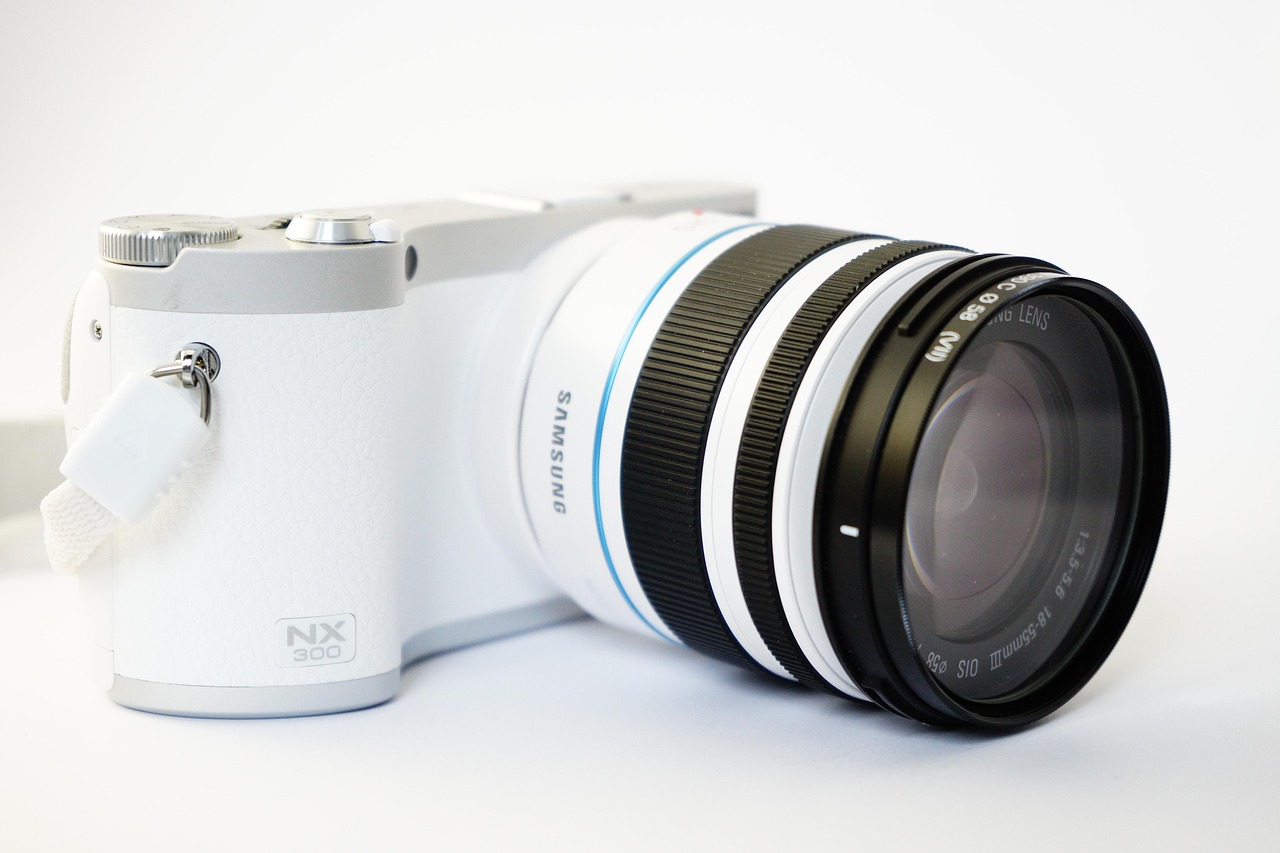
A robust user feedback loop is essential for refining the accuracy of AI-driven product recommendations. This iterative process allows the model to learn from user interactions, adjust its algorithms, and ultimately provide more personalized and relevant suggestions. The best product page layouts in 2023 prioritize clear navigation, visually appealing design, and seamless integration of AI-generated recommendations.
Implementing a feedback mechanism on product pages can take several forms. One effective approach is to collect user ratings and reviews for recommended products. These real-world interactions, both positive and negative, provide invaluable insights into the effectiveness of the recommendations. If a user consistently skips over or returns a product after viewing it, the AI model can interpret this as a signal that the recommendation needs adjustment. Incorporating trusted online product reviews into the feedback loop further strengthens the recommendation accuracy. Customers' candid assessments of products build a more nuanced understanding of user preferences, enhancing the AI's ability to predict and cater to individual needs.
In the event of a significant change or update to a product page, like an emergency redesign, it's crucial to treat this as a unique learning opportunity. Analyze user behavior before and after the redesign to identify any shifts in engagement or conversion rates. This analysis can reveal the impact of layout changes, copy revisions, and the placement of AI-generated recommendations. By understanding what works and what doesn't, you can refine your recommendation strategies and optimize the overall user experience, ultimately driving better sales and conversions.
Encourage users to actively participate in the feedback process through clear calls to action on the product page. This could include simple ratings, review submissions, or more interactive elements like "like" buttons for specific recommendations. The more qualitative and quantitative data collected, the better the AI model can learn and adapt to individual user preferences, resulting in a seamless and personalized shopping experience.
Ethical Considerations: Respecting Customer Privacy

When leveraging AI to personalize product recommendations, ethical considerations are paramount, especially for respecting customer privacy on product pages. In an era where data is a valuable commodity, it's crucial to balance personalized experiences with transparency and trust. A hasty or poorly planned implementation could lead to a necessary and costly emergency product page redesign, as customers increasingly scrutinize how their information is used.
Consider these practical insights for maintaining a customer-centric approach. First, be transparent about data collection. Clearly communicate what data is collected, why, and how it's used for personalization. Allowing users to opt-in for personalized recommendations can enhance user engagement without compromising privacy. Next, focus on data security. Implement robust measures to protect customer data from breaches or unauthorized access. This builds on the foundation of trust that is vital for long-term customer relationships.
Local product page SEO tips and mobile-first strategies also play a significant role in ethical personalization. Since many customers now access product pages via mobile devices, ensuring a seamless, secure experience across all platforms is essential. This involves optimizing page load times, simplifying interfaces, and making sure that AI-driven recommendations are tailored to the user's context, location, and past behavior without overwhelming them with too many choices. A local bookstore could use AI to suggest books based on an user's browsing history and location, enhancing the local product page SEO while respecting user boundaries.
Data-driven insights and personalization can elevate product page optimization tips, but they must be implemented with care. By striking a balance between AI-driven recommendations and user privacy, businesses can foster a loyal customer base that values both tailored experiences and the security of their personal information. This approach ensures that AI-powered personalization not only drives sales but also strengthens customer trust and loyalty.
Continuous Improvement: Evolving Recommendation Strategies

Continuous improvement is vital in the dynamic landscape of e-commerce, where consumer preferences and market trends evolve rapidly. To stay ahead, businesses must constantly refine and innovate their product recommendation strategies. Leveraging AI for personalized recommendations is not just a trend; it's a necessity. This involves more than just algorithms; it encompasses a comprehensive approach that includes both technological advancements and a deep understanding of consumer behavior.
Consider the impact of virtual reality (VR) product experiences. By immersing potential buyers in a 3D representation of a product, businesses can offer an enhanced, interactive experience that traditional 2D images cannot match. This level of engagement can significantly increase user interest and conversion rates. However, creating these VR experiences should be cost-effective. Professional product video creation, while offering a more conventional yet powerful medium, can also be optimized for budget-conscious businesses through collaborative platforms that offer affordable, high-quality production services.
In the realm of product page optimization tips, data-driven insights are key. Analyze user behavior, engagement metrics, and customer feedback to identify patterns and trends. If a significant number of visitors abandon the page before making a purchase, re-evaluate the layout, copy, and CTAs. Small adjustments, such as improving mobile optimization or adding relevant product reviews, can make a substantial difference. Remember, personalization goes beyond individual users; it involves tailoring experiences based on broader buyer personas, ensuring that each recommendation resonates with a diverse customer base.
Staying at the forefront of design trends while prioritizing user experience is a delicate balance. Innovations like voice search, for instance, demand a rethinking of product page structure and content strategy. SEO remains a cornerstone of product page optimization, with Google ranking heavily influenced by mobile-friendliness and high-quality, relevant content. Integrating these elements seamlessly requires a strategic, holistic approach that continuously incorporates new insights and adapts to the ever-changing digital marketplace.
Frequently Asked Questions About Using AI to Personalize Product Recommendations
What is AI and how can it personalize product recommendations? AI, or artificial intelligence, is a technology that enables machines to learn and perform tasks without explicit human intervention. In the context of product recommendations, AI algorithms analyze vast amounts of customer data, including browsing history, purchase behavior, and preferences, to understand individual needs and preferences. This allows for personalized product suggestions, enhancing the user experience and increasing sales.
How does AI improve customer satisfaction through personalized recommendations? By learning from user data, AI algorithms can predict what a customer might like or need, even beyond their explicit preferences. This precision in anticipating customer desires leads to more relevant product suggestions. Satisfied customers are more likely to make purchases, return to the website, and become loyal patrons, boosting customer satisfaction and retention.
Can AI be used for any type of business or industry? Absolutely. AI-driven personalization isn't limited to e-commerce. Retail stores, subscription services, content platforms, and even hospitality businesses can leverage AI for personalized recommendations. The key is having enough relevant customer data to train the AI models effectively. Whether it's suggesting products, movies, or tailored travel itineraries, AI can adapt to various industries.
What are some common challenges in implementing AI for product recommendations? Data privacy and security are primary concerns, especially with sensitive customer information. Ensuring compliance with data protection regulations and implementing robust security measures are crucial. The quality and diversity of data are essential for effective AI models. Incomplete or biased data can lead to inaccurate recommendations, so ongoing data management and model training are necessary.
How long does it typically take to implement an AI recommendation system? The time can vary significantly, from a few weeks to several months, depending on the complexity of the system, the volume of data, and the resources dedicated to development. Smaller businesses or startups may require a more lean approach, focusing on the core functionality, while larger enterprises can invest more time and resources for advanced features and seamless integration.
Are there any legal considerations when using AI for personalized recommendations? Absolutely. Depending on the jurisdiction, there may be legal implications regarding data collection, consent, and user privacy. It's essential to ensure compliance with data protection laws, such as GDPR in Europe or CCPA in California, to avoid legal issues and maintain customer trust. Consulting legal experts is recommended when implementing AI systems.
Leveraging AI for personalized product recommendations offers a powerful strategy to enhance customer experiences and drive conversions. By understanding AI capabilities, collecting relevant data, and selecting appropriate algorithms, businesses can effectively build customer profiles and train recommendation engines. Implementing dynamic product displays, A/B testing, and refining the recommendation engine based on user feedback ensures accuracy and drives sales.
Ethical considerations, such as prioritizing customer privacy, are paramount. Continuous improvement through evolving recommendation strategies, staying abreast of design trends, and integrating voice search capabilities keeps the approach relevant and engaging. By implementing these key takeaways, organizations can optimize their product page layouts, improve conversion rates, and build customer trust, ultimately achieving superior business outcomes.
This article provides valuable insights and actionable product page optimization tips to guide businesses in harnessing the power of AI for personalized recommendations, solidifying its position as a strategic resource for e-commerce success.
AI for Personalized Recommendations:
- Leverage AI to offer hyper-personalized shopping experiences, increasing conversions by 1-3 times.
- Gather and analyze customer data (browsing history, purchase patterns) to build buyer personas for targeted recommendations.
- Integrate user-generated content (product reviews) for localized social proof, enhancing conversion rate optimization (CRO).
- Combine data-driven personalization with mobile optimization and clear CTAs for effective product page conversions.
Data Collection for Personalized Recommendations:
- Use licensed product photography to gather customer interactions (image views, clicks) for detailed customer profiles.
- Combine visual data with product reviews and purchase history for nuanced recommendations.
- Implement same-day product page improvement with A/B testing and real-time analytics for dynamic engagement.
- Video content can increase click-through rates and reduce bounce rates, further enhancing engagement.
Refining Recommendation Accuracy:
- Incorporate user feedback through ratings, reviews, and interactive elements for more accurate AI-driven recommendations.
- Analyze user behavior before and after product page redesigns to refine recommendation strategies.
- Balance personalized experiences with transparency and trust, respecting customer privacy.
Ethical AI Personalization and Product Page SEO:
- Be transparent about data collection and use for personalization to build customer trust.
- Implement robust data security measures to protect customer information.
- Optimize product pages for mobile-first users and local SEO, offering secure, personalized experiences.
Continuous Improvement in E-commerce:
- Stay ahead of trends with innovations like VR product experiences and collaborative video production.
- Analyze user behavior, engagement metrics, and feedback to refine product page layouts and content.
- Prioritize user experience while adapting to design trends, such as voice search, and maintaining SEO.